Category: Uncategorized
Containers

The recent steady rains have really supercharged the garden. This includes the collection of container plantings. Everything is looking great! In fact, some of the containers had to be moved because they were getting pushy with their neighbors.

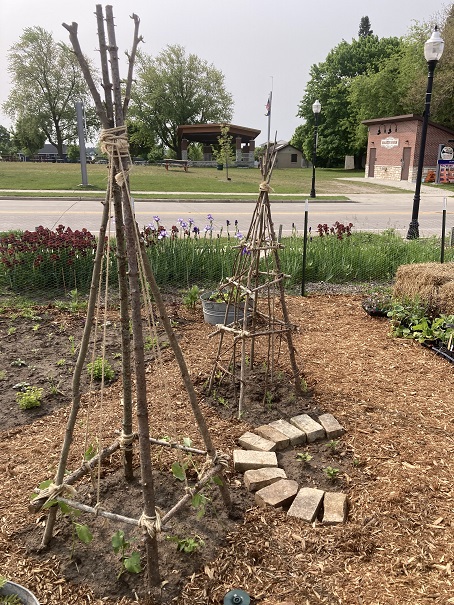
This included Space Master cucumbers, which were sending tendrils into some of the other container plants. We moved them to a spot with more space, where they could stretch out. We also added a trellis, made with iron rods.

The container fingerling potatoes were also crowding out sunlight from other containers. Those were moved over to the straw bale garden area, where they could keep the potato plants there company.

We’ve also added a look at the bean bush area, where the Ken Paschke and Tiger Eye varieties have really exploded after recent rains.
Straw Bale Evolution
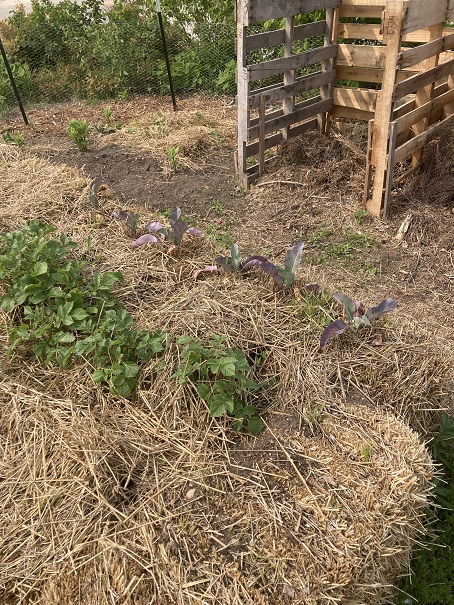
This is our first experience with straw bale gardening. The advantages are obvious: Beds are about 18” high, so we don’t need to bend over as far. And in areas of bedrock, straw bales can not only grow plants within the straw itself, but can be set up to create a framework around a deep well of soil for root vegetables.

Straw bales take preparation for them to become viable growing material. For ten days prior to planting within the straw, we added blood meal for nitrogen, and watered deeply and daily to help break down the straw. Only then was the straw soft and flexible enough for us to dig holes into the straw to receive plant starts.

We found that YouTube videos don’t reveal how difficult making holes in straw bales can be. First we tried a standard hand trowel, but that didn’t break through the straw. Ultimately, after several trials with different techniques and tools (including a drywall saw), we were able to tease apart the straw fibers using a very sharp hori knife. It was a surprisingly arduous task, but the benefits proved worth the trouble.
We planted potatoes in the well of soil on May 7.
May 23: The first of the brassicas went into soil-filled holes within the actual bales, and covered with a loose layer of straw to help retain moisture.
May 28: Potato plants started peeking up through the straw covering

June 3: We planted the remaining brassicas, along with kale, basil and chard

June 18: All the plantings are healthy, and now our challenge is to keep potato vines contained, to allow for sunlight to reach the perimeter plantings.

June 24: Potatoes are flowering! At this point, we could pull up a plant or two for baby potatoes. But we’ll let them grow instead.
Kitchen Garden Firsts
After some good, soaking rains, the Kitchen Garden is showing some early results.
Our first potato blossoms, in the Hay Bale Garden:
Our first peppers: Jimmy Nardellos.

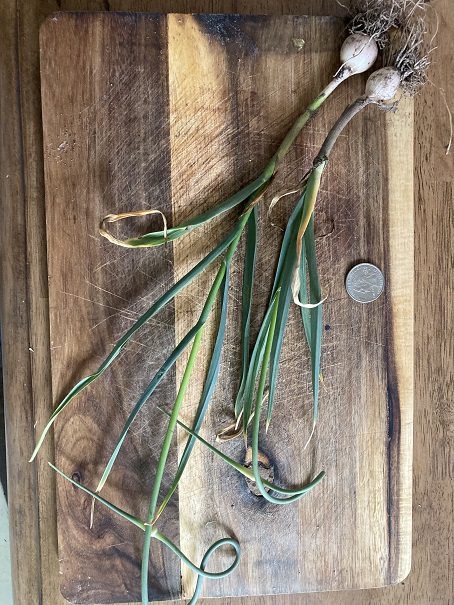
And some volunteers, dug up and replanted during the garden set-up: a couple little garlics, complete with scapes. Should make a nice pesto!
Side Dressing Tomatoes
Tomatoes need calcium; too little calcium in the soil can lead to blossom-end rot on fruit. To help prevent blossom-end rot you can side dress your tomatoes early in their growing process, after they have been planted in the ground and have established themselves. We used bone meal, an organic solution, to provide calcium for our tomatoes.
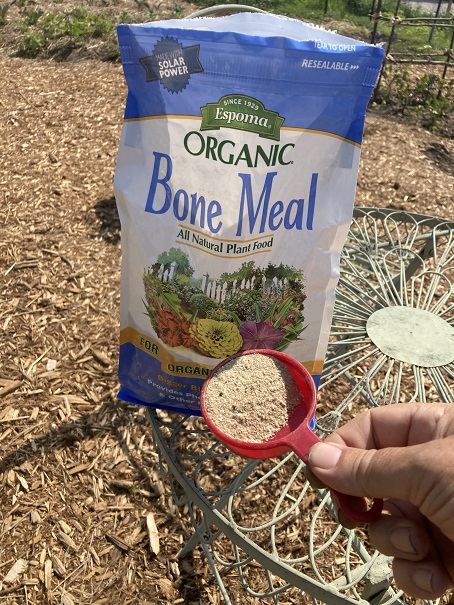
We placed a few tablespoons around the base of the plants (peppers shown here).
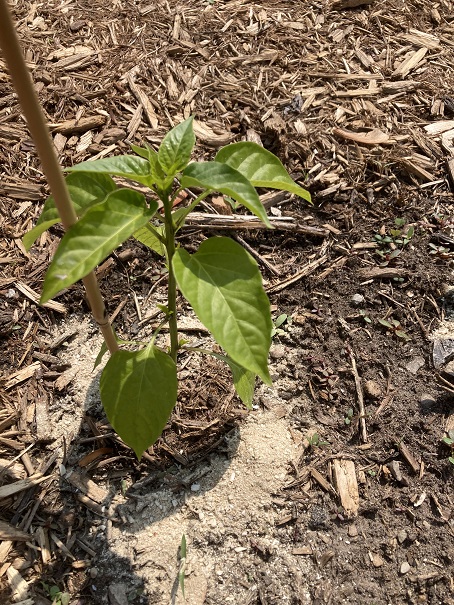
Then we turned the bone meal gently into the soil with a trowel.
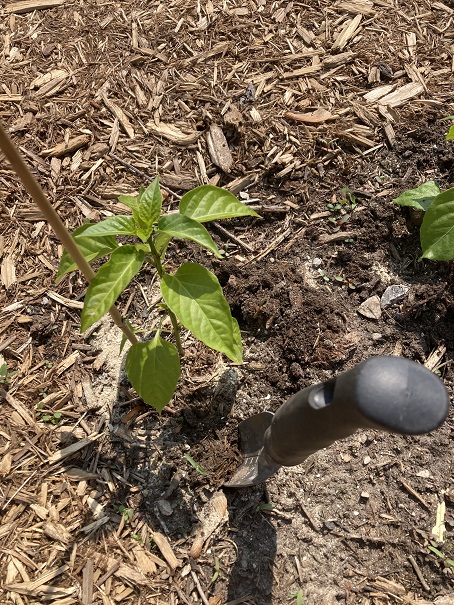
We then watered as usual.
Garden Video
Here is a video from garden volunteer Robin Miller, from her YouTube channel: Robin Gardens.
Planting Day!
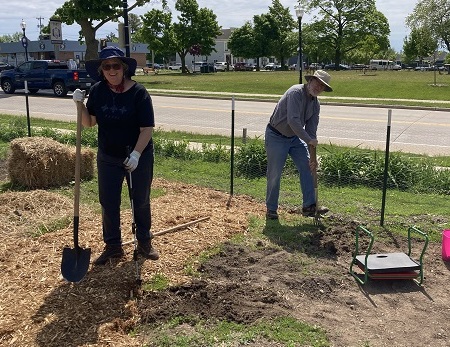
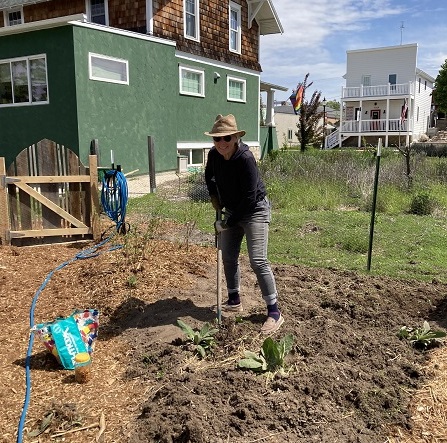
Things finally warmed up enough in Sturgeon Bay to start putting plants in the ground. Patrick, Virge, and Robin brought in all their starts and seeds and filled up their gardens with them. Tomatoes, peppers, cabbages, broccoli, corn, herbs, and all varieties of flowers went into the ground or into containers.
Robin brought up a carload of plants.

It took several days of work, but we got it all in.